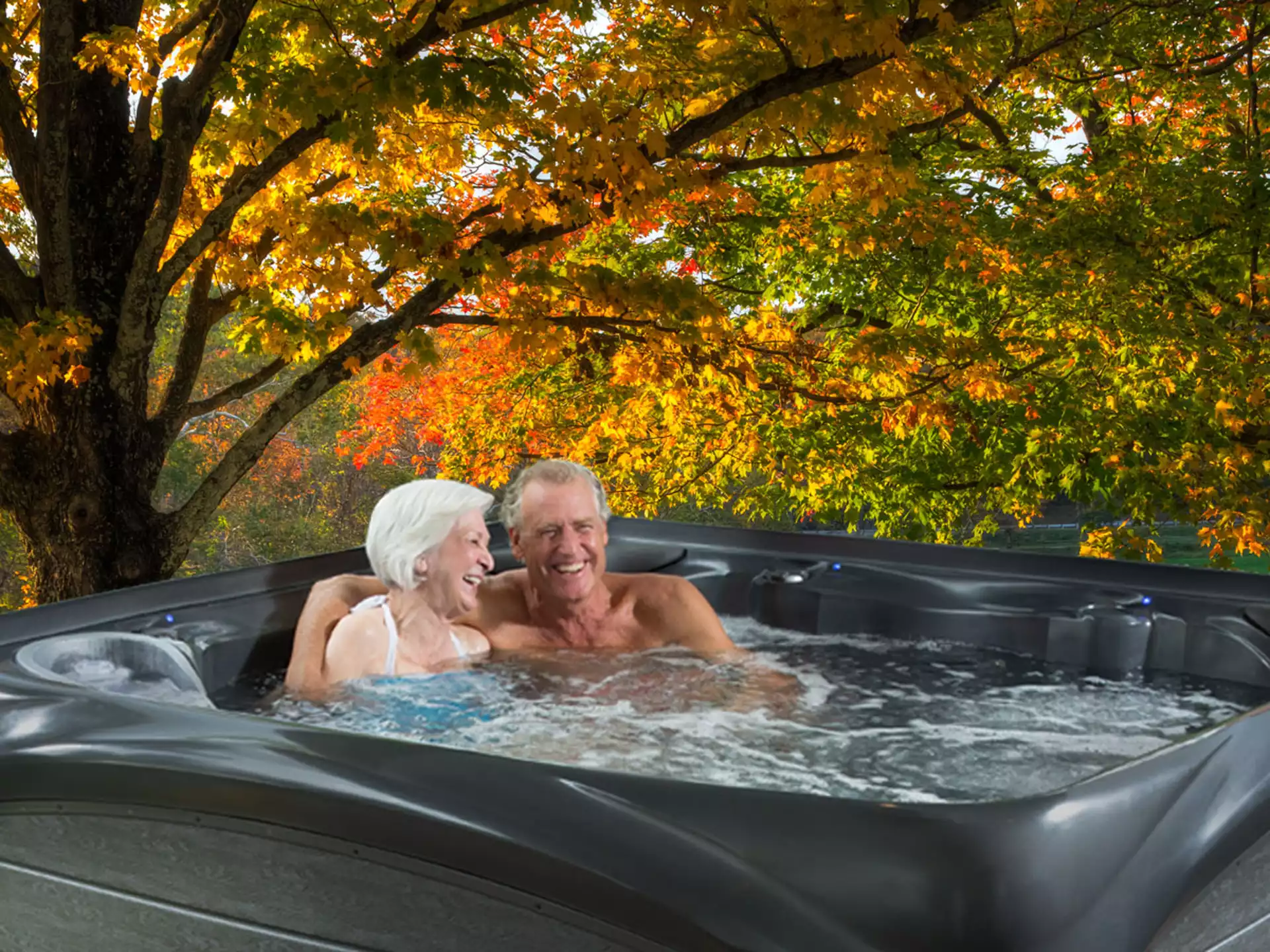
Back pain is not a minor inconvenience for most people who live with it. Nearly 65 million Americans report a recent episode of back pain [1], and for around 16 million of those, the pain is persistent enough to limit everyday activities. Getting out of bed, sitting at a desk, picking something up off the floor — all of it becomes a negotiation.
A hot tub won’t fix a structural problem, and it’s not a substitute for medical care. What it does do — backed by physiology, not marketing copy — is address several of the mechanisms that make back pain so stubborn: muscle tension, poor circulation to inflamed tissue, joint compression, and disrupted sleep. When those four things are working against you at once, the pain cycle is hard to break. Warm water immersion addresses all four simultaneously.
This guide walks through exactly how it works, which stretches are most effective in the water, what to look for in a hot tub if back pain is your primary reason for buying, and how to get the most from every soak.
Why Hot Tubs Work for Back Pain — The Physiology
There’s a reason hydrotherapy has been used for pain management for thousands of years. The physics of warm water immersion produce measurable changes in the body that directly target the sources of back discomfort.
Buoyancy Decompresses the Spine
Throughout the day, gravity loads your spine. By late afternoon, the cumulative compression can be significant — vertebral discs narrow, the surrounding muscles fatigue from holding everything upright, and any existing inflammation has less room to settle. Immersion in water up to the neck reduces effective body weight by up to 90 percent [2]. That unloading is immediate. Your spine floats toward a more neutral position, the muscles bracing around it release their grip, and intervertebral discs have space to rehydrate. For disc issues, sciatica, or chronic lumbar strain, this effect alone can produce noticeable relief within minutes.
Heat Increases Blood Flow to Damaged Tissue
Warm water dilates blood vessels, driving more oxygenated blood to the muscles and soft tissue surrounding the spine. Inflamed or injured tissue is often poorly perfused — chronic tightness restricts circulation, which slows healing and amplifies pain signals. The heat from a hot tub reverses that cycle: better blood flow means more oxygen and nutrients reaching the injury site, less metabolic waste building up in the tissue, and a reduction in the local inflammatory response.
Jets Target the Muscles That Drive Back Pain
Back pain is rarely just about the spine. In most cases, the muscles around it — the erector spinae along the vertebrae, the quadratus lumborum at the sides of the lower back, the piriformis deep in the glutes — are either locked in protective spasm or chronically shortened from sitting. Targeted jet massage breaks up that tension directly. The pulsing water pressure loosens muscle knots, stimulates the release of endorphins, and creates the kind of deep relaxation that’s hard to achieve through stretching alone.
Soaking Before Bed Breaks the Pain-Sleep Cycle
Back pain and poor sleep create a vicious loop — pain disrupts sleep, and sleep deprivation lowers your pain threshold, making the same level of pain feel worse. Research from the University of Texas at Austin [3] found that soaking in warm water 60 to 90 minutes before bed triggers a core temperature drop afterward that significantly speeds sleep onset and improves sleep quality. For chronic back pain sufferers, breaking that cycle is often as important as addressing the pain itself.
Important: Hot tub hydrotherapy is appropriate for general muscle soreness and mild to moderate back pain. If you have severe, acute, or injury-related back pain, consult your doctor before starting any hydrotherapy routine.
5 Effective Hot Tub Stretches for Back Pain
The warm water and buoyancy of a hot tub make it one of the best environments for stretching. Muscles are already warm and relaxed, joints are decompressed, and the water provides gentle resistance without load. The following stretches target the specific muscle groups most commonly responsible for lower and upper back pain.
Move into each stretch slowly. Never push through sharp pain. Hold each position for the time noted and breathe steadily throughout.
Knee-to-Chest — Lower Lumbar
Sit upright. Grasp one knee with both hands and draw it slowly toward your chest. Hold for 20 to 30 seconds, then switch sides. This stretch opens the lumbar facet joints and releases the hip flexors — two of the most common contributors to lower back pain. The buoyancy makes this significantly easier than on land.
Torso Twist — Thoracic Spine and Obliques
Sit upright with feet flat on the floor of the tub. Slowly rotate your upper body to the right, placing your left hand on your right knee and your right hand on the seat behind you. Hold for 15 to 30 seconds, then rotate to the other side. This mobilises the thoracic spine, which when stiff, transfers load down to the lumbar region.
Hamstring Stretch — Lower Back and Posterior Chain
Extend one leg along the seat of the hot tub. Hinge forward from the hips toward your toes, reaching as far as your flexibility allows. Hold for 20 to 30 seconds per leg. Tight hamstrings pull on the pelvis, increasing the anterior tilt and compressing the lower lumbar vertebrae. Loosening them consistently is one of the most effective long-term interventions for lower back pain.
Lower Back Release — Lumbar Muscles
Sit with your back against the wall of the tub. Bend both knees and draw them toward your chest. Wrap your arms around your shins and hold for 30 to 60 seconds, letting the heat and position gently traction the lower back. This is particularly effective immediately after a long day of sitting or standing.
Shoulder Blade Squeeze — Upper Back and Postural Muscles
Sit upright with arms relaxed at your sides. Pull your shoulder blades toward each other and hold for 10 to 15 seconds, then release. Repeat 8 to 10 times. Poor posture shortens the chest muscles and over-lengthens the upper back muscles, which refers pain and tension into the lower back. This simple move begins to correct that imbalance.
Pro tip: Run the jets on the lower lumbar region for 5 to 10 minutes before you start stretching. The targeted heat and pressure prime the muscles for movement and make each stretch more effective.
How Long Should You Soak for Back Pain Relief?
The research on warm water immersion points consistently to 15 to 20 minutes as the optimal soak duration [4] for therapeutic benefit. Dr. Bruce Becker, director of the National Aquatics and Sports Medicine Institute at Washington State University, found that immersion benefits peak at around the 20-minute mark and that the pain relief extends significantly beyond the soak itself.
Longer than 20 to 25 minutes increases the risk of dehydration and lightheadedness without proportional additional benefit. For back pain management, two 15 to 20 minute soaks per day — morning to loosen up, and evening to wind down before sleep — tends to produce the most consistent results.
Keep the temperature between 100°F and 102°F. Higher temperatures can increase rather than reduce inflammation and place unnecessary strain on the cardiovascular system, particularly for those already dealing with chronic pain conditions.
What to Look for in a Hot Tub if Back Pain Is Your Priority
Not all hot tubs are built equally for therapeutic use. If managing back pain is your main reason for buying, the following features make a material difference. Our team at AJ Spa & Hot Tubs can walk you through these in person at our Patchogue showroom.
Lumbar Jet Placement
The most important feature. Look for jets positioned specifically to target the lower back — ideally with separate jets for the upper and lower lumbar zones. The jets should be adjustable in both direction and pressure intensity so you can dial in exactly where and how hard the water hits. Fixed jets at the wrong height are a common frustration with budget models.
Adjustable Jet Pressure
High-pressure jets feel powerful but can overstimulate inflamed tissue, particularly during a flare-up. The ability to reduce jet intensity matters as much as the ability to increase it. Look for individual jet control rather than a single system-wide pressure setting.
Ergonomic Lumbar Seating
Contoured seating that follows the natural curve of the spine reduces the need to brace your back to stay comfortable in the water. The Sundance® 880 Series — including the Optima® — features ergonomically designed seats that position you directly in front of lumbar jets, making each soak therapeutically consistent rather than hit-or-miss.
Neck and Shoulder Coverage
Upper back tension is a major driver of referred lower back pain. A hot tub with dedicated neck and shoulder jets allows you to address the full chain — from the base of the skull to the sacrum — in a single session.
Handrails and Non-Slip Entry
For anyone dealing with back pain, getting in and out of a hot tub safely matters. Steps with solid handrails and non-slip surfaces reduce the risk of a sudden movement that undoes the benefit of the soak. This is not a luxury feature — it’s a functional requirement for therapeutic use.
Easy-Access Financing
Therapeutic hot tubs are an investment. Financing options are available at AJ Spa & Hot Tubs to help spread the cost across manageable monthly payments, making it easier to access the model with the right therapeutic features rather than settling for less.
Maximising Your Results — Practical Tips
The hot tub is a tool. How you use it determines how much relief you get.
- Hydrate before and after every soak. Warm water causes perspiration you can’t feel. Dehydration stiffens joints and compounds the pain you’re trying to relieve.
- Soak consistently. Occasional soaks provide temporary relief. Daily or twice-daily soaking over two to three weeks produces measurable improvements in pain levels and mobility.
- Position matters. Sit so that jets align with your specific pain zone — don’t just sit in the most comfortable seat. Adjust your position during the soak if needed.
- Pair with professional care. Hydrotherapy works best alongside — not instead of — treatment from a physiotherapist, chiropractor, or physician if your pain is significant.
- Track what works. If morning soaks before your commute make the biggest difference, prioritise those. Individual response varies, and paying attention to your own pattern accelerates results.
Frequently Asked Questions
Can a hot tub make back pain worse?
In some situations, yes. Water that is too hot can increase inflammation. Soaking too long can cause muscle fatigue. And for certain acute injuries — a fresh disc herniation or a recent back strain — heat can increase swelling in the early stages. If your pain is acute or injury-related, get clearance from a healthcare professional first. For chronic or postural back pain, the risk is low when used sensibly.
How quickly will I notice results?
Most people feel immediate relief during and after their first soak. The progressive benefits — reduced morning stiffness, improved mobility, better sleep — typically become noticeable after two to three weeks of consistent daily use.
Is a hot tub better than a heating pad for back pain?
For most cases of back pain, yes. A heating pad provides surface-level heat to one area. A hot tub provides full-body warmth, buoyancy-driven spinal decompression, targeted jet massage, and the sleep benefits of the post-soak temperature drop — none of which a heating pad can replicate.
What if I have a specific back condition like sciatica or a herniated disc?
Many people with sciatica and disc issues find hot tub hydrotherapy helpful, particularly the buoyancy component which reduces spinal loading. That said, the specifics matter — the angle of a herniation, for example, affects whether heat is appropriate. Always check with your treating physician or physiotherapist before beginning hydrotherapy for a diagnosed structural condition.
Can I use a hot tub every day for back pain?
Yes, and for chronic back pain, daily use is generally recommended to maintain consistent benefit. Keep sessions to 15 to 20 minutes, stay hydrated, and monitor how you feel. If you notice increased pain after soaking, reduce the water temperature or session length and speak to your doctor.
If back pain is also affecting your joints more broadly, our guide on how hot tubs help with arthritis covers the overlapping benefits of hydrotherapy for joint-related pain.
Visit AJ Spa & Hot Tubs in Patchogue, NY
If back pain is part of your daily life and you want to find a hot tub that actually addresses it, come and see us at AJ Spa & Hot Tubs. We’ve been serving Nassau and Suffolk County since 1978, and our team is trained to match customers to models based on their specific therapeutic needs — not just their budget.
We stock Sundance® Spas, Nordic Hot Tubs™, Vita Spa, and DreamMaker Spas™ across a range of sizes and price points, and our showroom at 687 Route 112, Patchogue, NY is open seven days a week. Call us at (631) 289-3350, or stop in and take a look — we’re happy to walk you through which models have the jet placement and seating that will make a real difference for your back.
You can also explore our full range of hot tubs online, check out our health benefits page for more on what hydrotherapy can do, or get in touch with any questions.